On the eve of its five-year anniversary, I reflect on a powerful moment in my journey through the modern civil rights movement.
I helped organize the rally with All of Us or None, as chapters across the country mobilized in the wake of George Floyd’s murder. It was 2020, and we were still reeling from the isolation and grief of COVID. But the pain of watching yet another Black man lynched in public dragged us into the streets anyway. We masked up and marched on.
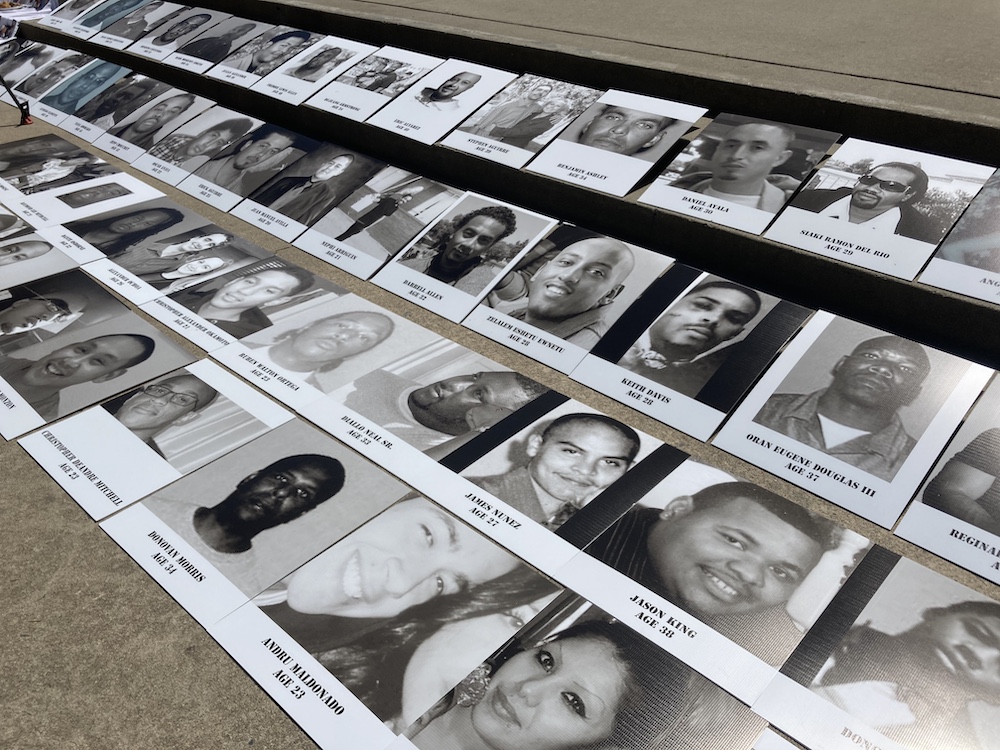
When we stood on the steps of the California State Capitol, each of us holding the face of someone stolen by police violence, it wasn’t just a protest—it was a demand for visibility. A reckoning. A collective scream: Stop Killing Us.
My role was to create the posters.
Six hundred of them.
Six hundred lives.
Each one a name, a face, a story. Some I knew—Oscar Grant, Stephon Clark, Sean Monterrosa. Others were local, lesser-known, unspoken casualties in the long war on Black life. Together, these portraits became an undeniable wall of truth.
That day, families came with their own grief—holding signs, holding each other. We gathered shoulder to shoulder with members from every California chapter of All of Us or None, and the energy was both heavy and holy. Legislators, moved by the sheer force of presence and pain, came outside to meet us. Some stumbled over apologies. Others promised action. Whether they followed through or not, we had already done what we came to do: make it impossible to look away.
We weren’t alone. AOUON members from Wisconsin had traveled to Minneapolis to support the frontline protests there. In Eastern Washington, our comrades flew banners through city streets. In Cincinnati, they marched for the 500+ arrested for breaking curfew during peaceful demonstrations. We were everywhere. And we were tired. But we were unrelenting.
To organize amid a pandemic is no small feat. To mourn publicly, while the state keeps killing and caging your people, is revolutionary. That protest wasn’t the beginning or the end of anything. It was one more link in a chain of resistance, forged by grief but carried forward by love.
We said their names.
We stood with their families.
We demanded the killing stop.
And we will keep showing up—until it does.