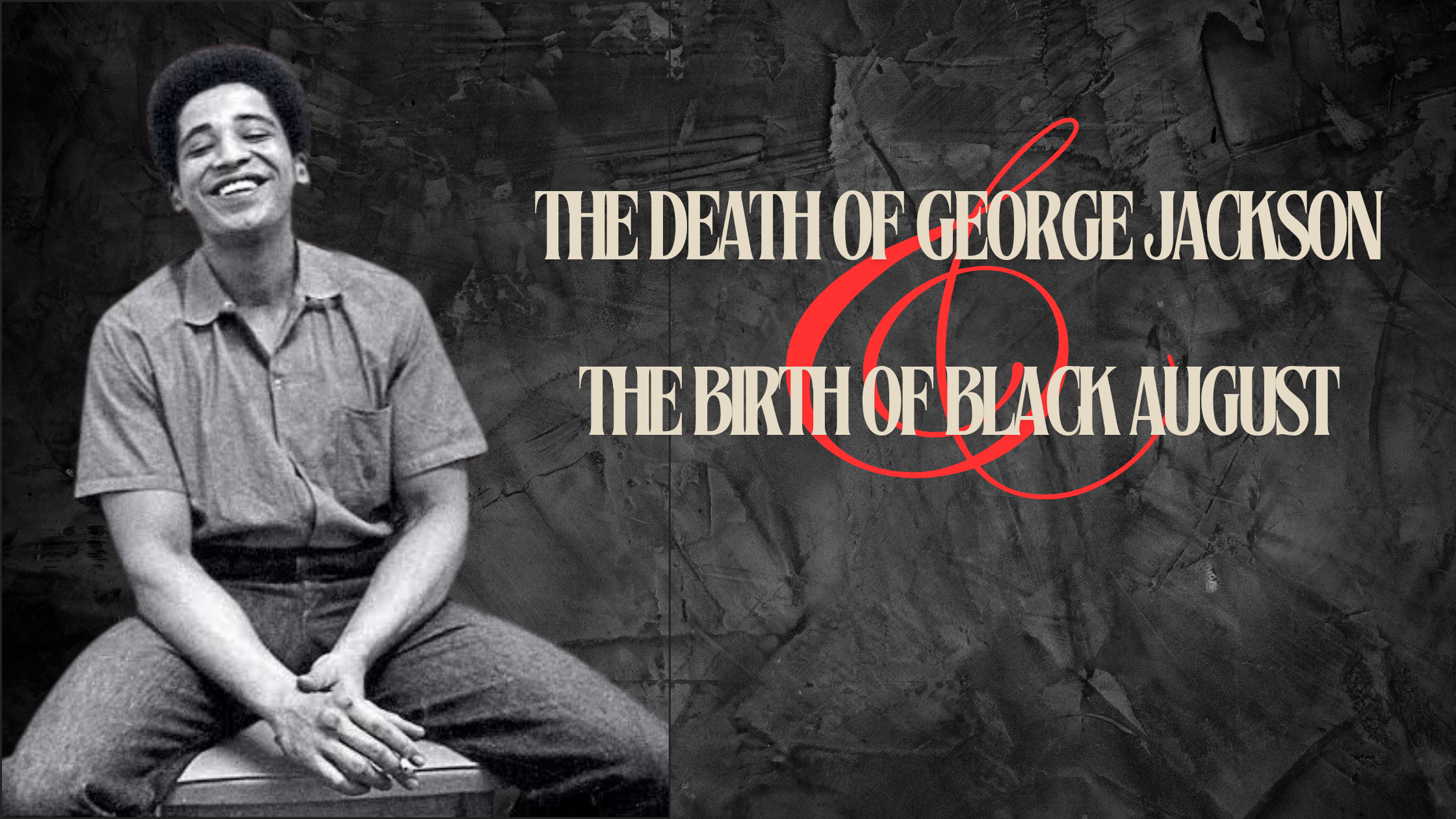
In the searing heat of a California summer in 1971, the struggle for Black liberation lost one of its fiercest minds and most unyielding spirits. On August 21, George Jackson—revolutionary, writer, and Minister of Defense for the Black Panther Party—was shot and killed by San Quentin prison guards in an assassination that would solidify the decade’s legacy of controlling Black radicals through acts of violence.
Jackson’s death was the culmination of years of targeted repression against him and other imprisoned Black radicals. His writings, particularly Soledad Brother and Blood in My Eye, cut through the sanitized myths of American justice to reveal a system built on control, exploitation, and racial hierarchy. Jackson understood prisons as a microcosm of the empire—a place where state violence could be studied in its purest form.
He also understood the power of collective resistance. From behind prison walls, Jackson inspired unity across racial lines and connected the fight of incarcerated people to the global anti-colonial struggle. For this, he was seen as dangerous—not just to prison authorities, but to the social order they upheld.
The Birth of Black August
Eight years after his killing, incarcerated members of the Black Guerilla Family in California marked the month of August as a time for study, discipline, and commemoration. They called it Black August—a living memorial to those who died in the struggle for Black liberation, from the rebellions of enslaved Africans to the modern prison movement.
The month is heavy with anniversaries: the Haitian Revolution’s launch on August 14, the Nat Turner Rebellion on August 21, the March on Washington on August 28. But August 21, the day of George Jackson’s death, became the spiritual center. It is the day that made the need for Black August undeniable.
Why It Still Matters
More than fifty years later, the prison system George Jackson critiqued has only grown. Mass incarceration has entrenched itself as a cornerstone of American policy, locking away millions—disproportionately Black and brown—in conditions Jackson would recognize all too well.
Black August asks us not to simply remember the dead, but to study, fast, organize, and resist. On August 21, communities gather to read Jackson’s words, to honor the lives cut short by state violence, and to recommit to dismantling the systems that took them.
Jackson once wrote, “The ruling clique approaches its task with a ‘what to do with the n*****s’ attitude. Their answer is ‘lock ’em up.’” His words still sting because they remain true. But so too does the vision he left behind—a vision of solidarity, self-determination, and liberation that no prison walls could contain.
On August 21, we remember. And we fight.