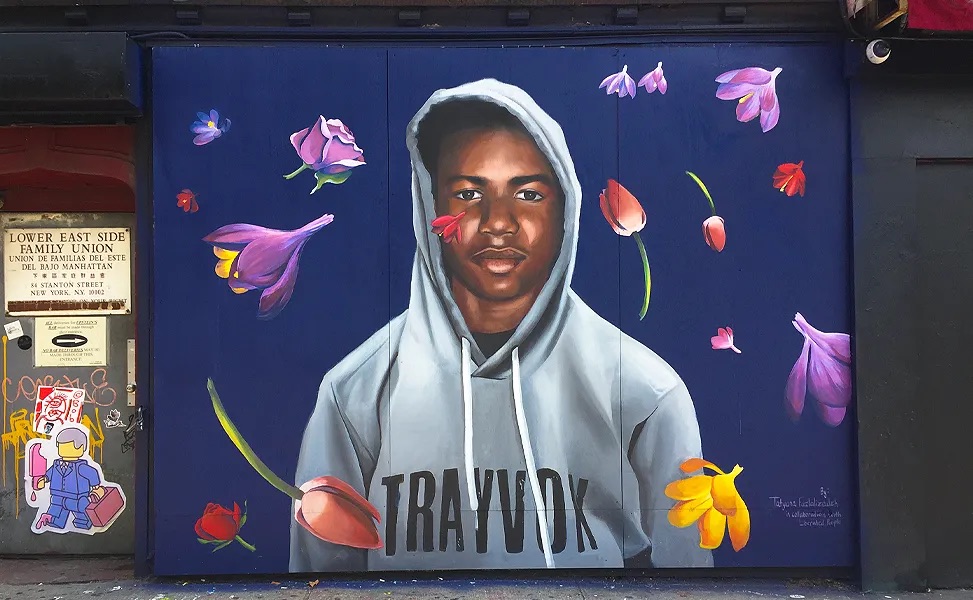
When George Zimmerman was acquitted for killing 17-year-old Trayvon Martin, there was no drumming in the streets. No tears of relief. No symbolic victory. Just a deep, echoing silence—followed by the roar of outrage and heartbreak.
It felt like the system had looked Trayvon’s family in the eye and said: Your son’s life didn’t matter here.
Zimmerman wasn’t a police officer, but he carried the authority our culture too often hands to white men with guns: the power to see a Black teenager in a hoodie as a threat, the power to confront him, kill him, and claim self-defense. It wasn’t just Zimmerman who was on trial. It was the right of Black youth to exist without suspicion.
And when the jury let him walk free, the verdict echoed beyond that Florida courtroom. It said: If you kill a Black child and say you were scared, the law will back you up.
There was no comfort to be found. No moment of symbolic accountability. Zimmerman didn’t just escape punishment—he became infamous. Profited off the killing. Auctioned off the gun. Flaunted his freedom while Trayvon’s parents buried their child and were forced to endure headlines that put their son’s humanity up for debate.
As an abolitionist, I don’t look to the legal system for healing. But with Zimmerman, there wasn’t even a façade of justice—just a confirmation of how little Black life is valued in America. No reckoning. No remorse. No repair.
I remember the despair that followed. But I also remember how that verdict lit a spark. The #BlackLivesMatter movement was born from that moment—out of the recognition that if the system refused to deliver justice, then we’d have to build something beyond it.
Trayvon should be alive. And while no verdict can undo that loss, the work continues in his name.